Digital Marketing Strategy: A Growth Roadmap for Small Businesses
Imagine opening a shop on a busy street.
You decorate it beautifully. You arrange the products. You print visiting cards. You tell a few friends. Then you wait.
Some people walk in. Some ask questions. Some leave. Some say they will come back. But after a few weeks, you realize something important:
Being open is not the same as having a growth system.
The same thing happens online.
Many small businesses create a website, post on Instagram, run a few ads, and hope customers will come. But without a clear digital marketing strategy, everything feels random. One week the focus is social media. Next week it is Google Ads. Then SEO. Then a new website. Then a festival offer.
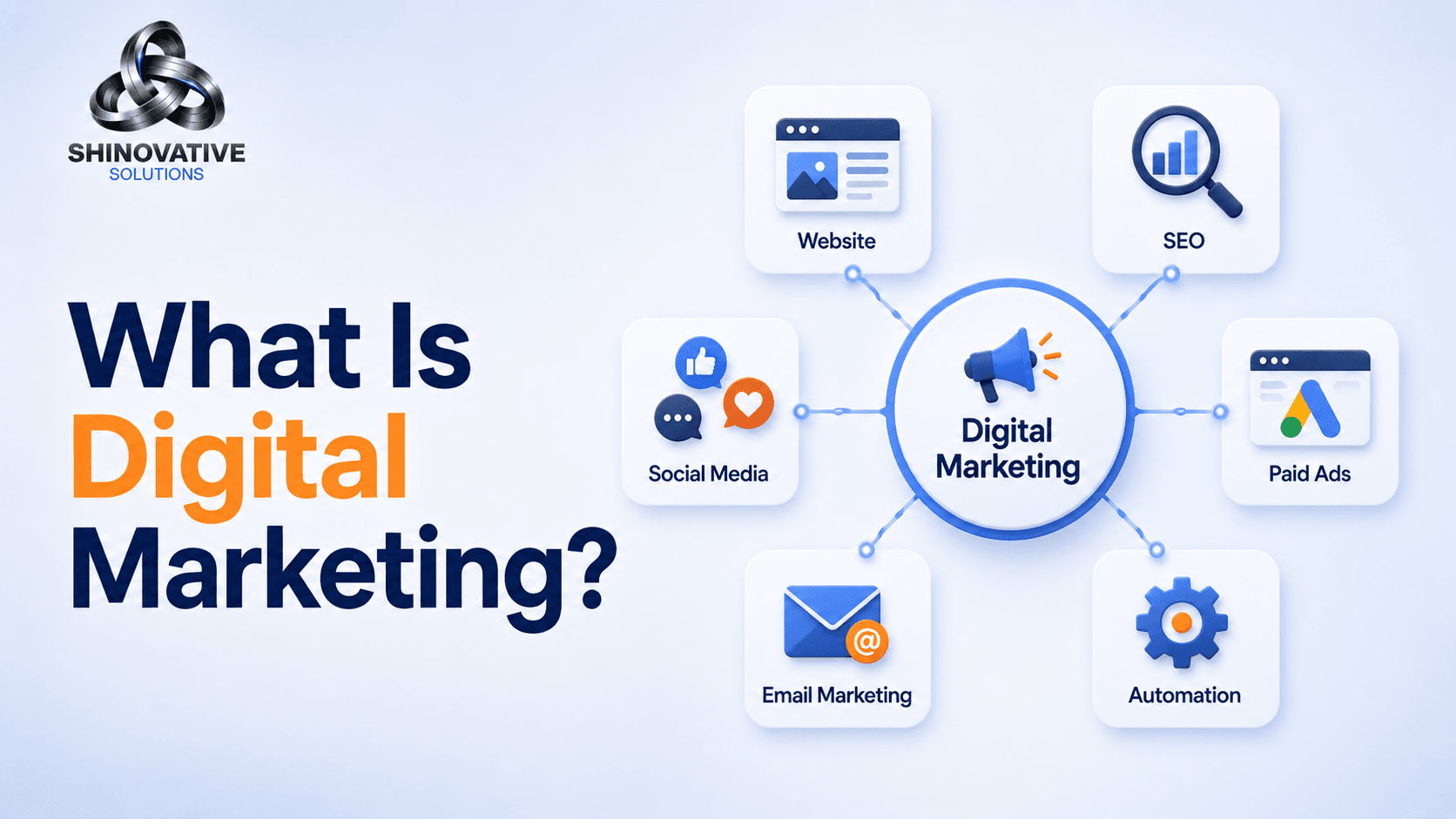
A digital marketing strategy gives direction. It connects your website, search visibility, ads, content, social media, and follow-up process into one growth system.
The goal is not to “be everywhere.” The goal is to be present in the right places with the right message.
What Is a Digital Marketing Strategy?
A digital marketing strategy is a clear plan for how your business will attract, engage, convert, and retain customers online.
It answers simple but important questions:
- Who are we trying to reach?
- What problem do we solve for them?
- Where do they search or spend time?
- What message will make them pay attention?
- What action do we want them to take?
- How will we follow up?
- How will we measure success?
Without these answers, digital marketing becomes guesswork.
A business may get likes but no leads. Traffic but no sales. Ad clicks but no conversions. Website visitors but no inquiries.
Strategy fixes the disconnect.
The Small Business Growth Roadmap
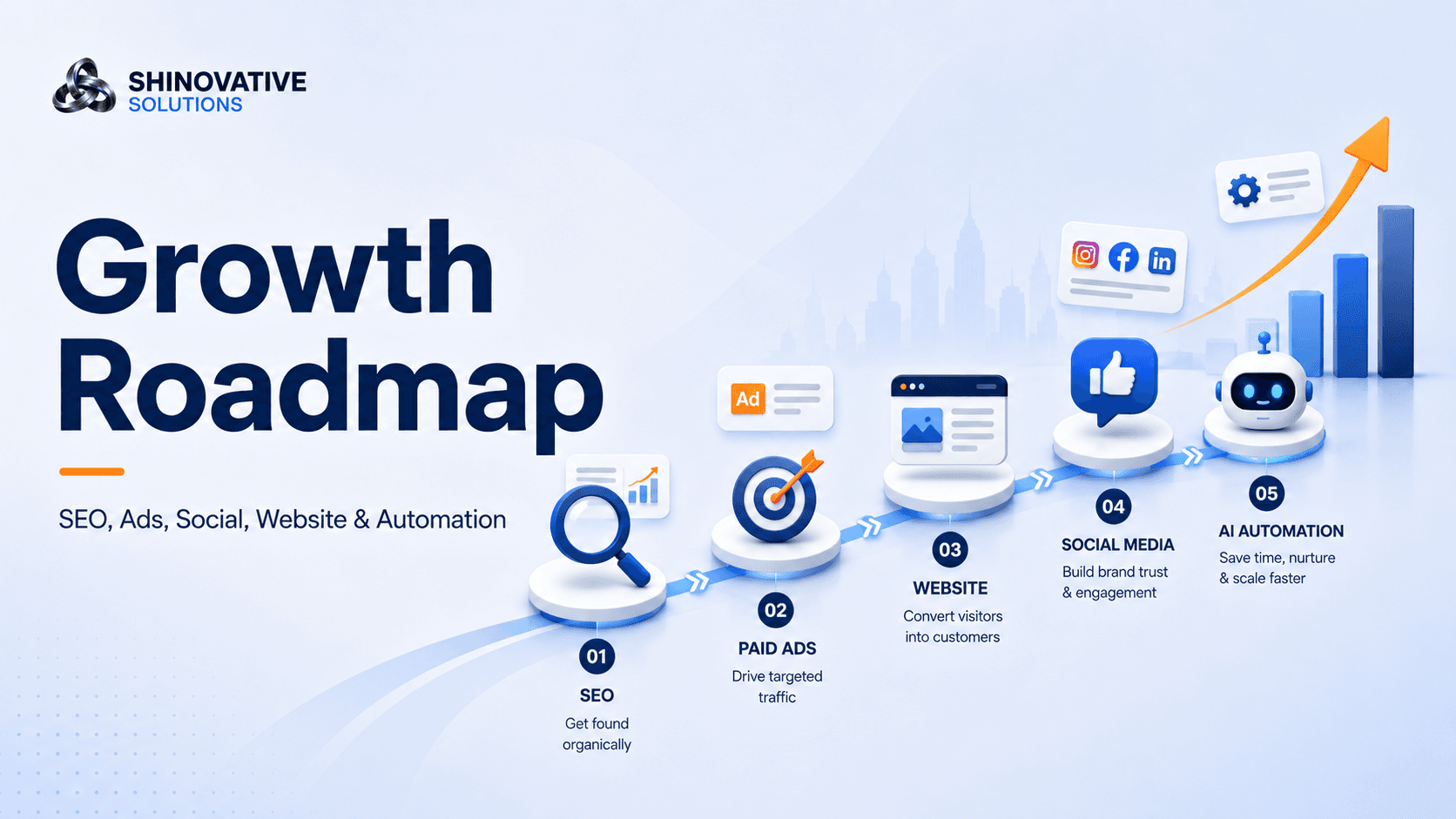
A simple digital marketing roadmap has five stages:
Foundation → Visibility → Trust → Conversion → Retention
Let’s break it down.
1. Foundation: Build the Base Before Running Campaigns
Before spending on ads or posting daily content, make sure your foundation is clear.
Your foundation includes:
- Your offer
- Website
- Service pages
- Google Business Profile
- Brand message
- Contact process
- Tracking setup
Think of it like preparing a store before inviting customers. If people arrive and the store is confusing, you lose them.
Example
A local interior designer wants more leads. They start running ads, but the website only has a homepage, a gallery, and a phone number.
There is no page explaining services. No process. No pricing guidance. No testimonials. No inquiry form. No location targeting.
The ads may bring traffic, but visitors do not get enough confidence to contact.
Before running campaigns, that business needs stronger service pages, trust signals, and a clearer inquiry path.
2. Visibility: Help the Right People Find You
Once your foundation is ready, the next step is visibility.
Visibility means appearing where your customers are already looking or spending attention.
This can happen through:
- Local SEO
- Google Search
- Google Ads
- Meta Ads
- Social media content
- Blog content
- Business directories
- Referrals
- Email marketing
But every channel has a different role.
Google helps capture people who are searching. Meta helps create awareness and interest. SEO builds long-term organic visibility. Content builds trust and education. Email and WhatsApp help with follow-up.
Do not use every channel just because others are using it. Choose channels based on your customer behavior.
Example
A clinic may benefit from Google Search and local SEO because people search when they need treatment.
A fashion brand may benefit from Instagram content, Meta Ads, influencer collaborations, and e-commerce SEO.
A B2B service provider may need LinkedIn, Google Ads, SEO, case studies, and email follow-ups.
Different businesses need different channel mixes.
3. Trust: Give People Reasons to Believe You
Visibility gets attention. Trust turns attention into interest.
People usually do not contact a business just because they saw one ad or one post. They look for proof.
Trust signals include:
- Reviews
- Testimonials
- Case studies
- Before-and-after examples
- Portfolio
- Client stories
- Clear process
- Educational content
- Professional website
- Active social media presence
A small business does not need to look like a huge corporation. It needs to look real, reliable, and clear.
Creative example
Imagine two website development companies.
Company A says:
We build professional websites.
Company B says:
We build fast, mobile-friendly business websites with service pages, contact forms, WhatsApp integration, SEO structure, and conversion-focused layout.
Company B sounds more trustworthy because it explains the actual value.
Specifics create confidence.
4. Conversion: Make the Next Step Easy
A digital marketing strategy fails if people are interested but do not take action.
Conversion means turning visitors into leads, calls, bookings, purchases, or inquiries.
To improve conversion, your website and campaign pages should have:
- Clear headline
- Simple explanation
- Strong CTA
- Contact form
- Click-to-call button
- WhatsApp option
- Trust signals
- FAQs
- Fast loading speed
- Mobile-friendly layout
Do not make people search for how to contact you.
If someone likes your service, the next step should be obvious.
Example
Weak CTA:
Submit
Better CTA:
Request a Free Digital Growth Audit
Weak CTA:
Contact Us
Better CTA:
Talk to Shineovative About Getting More Leads
A better CTA tells the visitor what they are getting.
5. Retention: Do Not Forget Existing Customers
Many businesses focus only on getting new customers. But growth also comes from retaining and re-engaging people who already know you.
Retention channels include:
- Email updates
- WhatsApp follow-ups
- Remarketing ads
- Customer education
- Loyalty offers
- Service reminders
- Upsell campaigns
- Review requests
For example, an e-commerce store can follow up with customers after purchase, recommend related products, ask for reviews, and bring them back with seasonal offers.
A service business can send monthly insights, maintenance reminders, or new service updates.
The easiest customer to reach is often the one who already trusted you once.
The Channel Role Map
Use this simple map to understand what each digital marketing channel does.
| Channel | Best For |
|---|---|
| Local SEO | Getting found by nearby customers |
| Google Ads | Capturing high-intent searches quickly |
| Meta Ads | Building awareness and generating leads |
| Website | Converting visitors into inquiries or sales |
| Blogs | Educating customers and supporting SEO |
| Social Media | Building trust and staying visible |
| Email / WhatsApp | Follow-up, retention, and repeat sales |
| AI Automation | Saving time and improving response speed |
A strong strategy does not treat these as separate random tasks. It connects them.
A Simple 30-Day Digital Marketing Plan
Week 1: Fix the foundation
- Review your website homepage.
- Create or improve key service pages.
- Update your Google Business Profile.
- Add clear CTAs.
- Check contact forms and phone numbers.
- Set up basic tracking.
Week 2: Improve trust
- Add testimonials.
- Add portfolio or service examples.
- Collect customer reviews.
- Add FAQs.
- Create one helpful blog post.
Week 3: Start visibility campaigns
- Choose one primary channel.
- Run a small Google Ads or Meta Ads test.
- Post useful content consistently.
- Improve local SEO keywords.
- Track leads and inquiries.
Week 4: Review and optimize
- Check what brought traffic.
- Check what brought leads.
- Review ad search terms or creative performance.
- Improve weak landing pages.
- Follow up with warm leads.
- Plan next month based on data.
This is better than trying ten things randomly.
Common Digital Marketing Strategy Mistakes
1. Running ads before fixing the website
Ads can bring traffic, but the website must convert that traffic.
2. Posting content without a goal
Every content piece should build awareness, trust, education, or conversion.
3. Copying competitors blindly
Your business, audience, budget, and offer may be different.
4. Measuring only likes and views
Track leads, calls, inquiries, purchases, and customer quality.
5. Trying every platform at once
Start with the channels most connected to your customers.
Final Takeaway
Digital marketing is not about doing everything online.
It is about building a clear growth system.
Start with a strong foundation. Get visible in the right places. Build trust with useful content and proof. Make conversion easy. Follow up with people who already showed interest.
When these pieces work together, marketing becomes less confusing and more predictable.
For small businesses, that clarity can make the difference between random activity and real growth.
FAQs
What is a digital marketing strategy?
A digital marketing strategy is a plan for attracting, converting, and retaining customers online using channels like SEO, ads, websites, content, social media, and automation.
Which digital marketing channel should a small business start with?
It depends on the business. Local businesses often start with Google Business Profile and local SEO. Businesses needing faster leads may test Google Ads or Meta Ads. E-commerce brands may need product pages, SEO, and retargeting.
Is social media enough for digital marketing?
No. Social media helps with visibility and trust, but most businesses also need a website, SEO, lead capture, follow-up, and conversion strategy.
How long does a digital marketing strategy take to work?
Some paid campaigns can generate traffic quickly, but stronger growth usually takes consistent optimization over weeks and months.
Do small businesses need automation?
Yes, even simple automation can help. Follow-up messages, lead tracking, appointment reminders, and email responses can save time and reduce missed opportunities.
Internal Link Suggestions
Link this blog to:
- Digital Marketing Services page
- Local SEO Services page
- Google Ads Services page
- Meta Ads Services page
- Website Development Services page
- AI Automation Services page
- Contact page
Suggested anchor text:
- digital marketing services
- local SEO services
- Google Ads campaigns
- Meta Ads strategy
- website development for business growth
- AI automation for lead follow-up
- digital growth audit
Soft CTA
If your business is doing marketing activities but still not seeing consistent leads, the issue may not be effort. It may be lack of strategy.
Shineovative Solutions can review your website, SEO, ads, social media, and follow-up process to help you build a clearer digital growth roadmap.