Local SEO Checklist: A Practical Guide to Get Found by Nearby Customers
Imagine this.
A customer is sitting in their car, phone in hand, searching “best salon near me” or “digital marketing agency near me.” They are not doing research for fun. They are ready to call, visit, compare, or book.
Now here is the real question:
Will your business show up, or will your competitor get that customer?
That is what local SEO is really about. It is not just rankings. It is about being visible at the exact moment someone nearby is looking for what you offer.
This checklist will help you review the most important parts of your local SEO setup without overcomplicating it.
1. Start With Your Google Business Profile
Your Google Business Profile is often the first impression people get of your business. Before they visit your website, they may see your rating, photos, business hours, location, reviews, and phone number directly on Google.
So the first step is simple: make sure your profile is complete.
Check these:
- Business name is correct
- Phone number is active
- Website link works
- Business hours are updated
- Address or service area is accurate
- Primary category is correct
- Secondary categories are added
- Services are listed properly
- Photos are recent
- Reviews are being answered
Quick example
If you run a digital marketing agency, do not just list “Marketing.” Add specific services like:
- Local SEO
- Google Ads
- Meta Ads
- Website Development
- E-Commerce Solutions
- AI Automation
- Social Media Management
The more clearly your profile explains your services, the easier it becomes for both Google and customers to understand your business.
2. Choose the Right Business Category
This small step can make a big difference.
Your primary category tells Google what your business mainly does. If you choose the wrong category, your business may show up for the wrong searches or struggle to appear for the right ones.
For example:
A cafe should not choose a generic category if a more specific cafe or restaurant category is available. A dental clinic should choose “Dentist” instead of only “Medical Clinic.” A digital agency should choose a category close to internet marketing, advertising, or marketing services.
Think of your category as your business label in Google’s mind.
If the label is wrong, the ranking signals become weak.
3. Add Real Photos, Not Just Stock Images
People trust what they can see.
A business with real photos feels active. A business with no photos feels incomplete. A business with only generic stock images feels less trustworthy.
Add photos such as:
- Storefront or office
- Team photos
- Product photos
- Work samples
- Customer experience
- Behind-the-scenes moments
- Before-and-after results
- Screenshots of completed work, if relevant
For a service business like Shineovative, visuals can include website projects, campaign dashboards, creative samples, service graphics, and team workflow images.
The goal is not to look perfect. The goal is to look real, active, and professional.
4. Ask for Better Reviews
Reviews are one of the strongest trust signals in local SEO.
But here is where many businesses go wrong: they only ask customers to “leave a review.” That usually leads to short reviews like:
Good service.
That is nice, but it does not give much context.
A better review naturally explains what service was used and what result the customer got.
For example:
Shineovative helped us improve our Google Business Profile and local SEO. We started getting more calls from nearby customers within a few weeks.
This kind of review is more useful for future customers because it tells a story.
Simple review request message
You can send this to happy customers:
Thank you for choosing us. If you had a good experience, we would really appreciate a quick Google review. You can mention what service we helped you with and how your experience was. It helps other customers understand our work better.
Do not fake reviews. Do not pressure customers. Just make it easy for real customers to share honest feedback.
5. Create Service Pages, Not Just One Services Page
Many business websites have one page called “Services” where everything is listed together.
That is fine for visitors, but it is weak for SEO.
If you offer multiple services, create separate pages for your important services.
For example:
- Local SEO Services
- Google Ads Services
- Meta Ads Services
- Website Development
- E-Commerce Development
- AI Automation
- Social Media Management
Why does this help?
Because each page can focus on one service, one search intent, and one type of customer problem.
A person searching for “Google Ads agency” should land on a page that talks deeply about Google Ads, not a general page that briefly mentions ten services.
Focused pages rank better, explain better, and convert better.
6. Use Local Keywords Naturally
Local keywords help Google connect your business with location-based searches.
Examples:
- local SEO services near me
- Google Ads agency in Hyderabad
- website development company near me
- best salon in Gachibowli
- dentist near me
- restaurant in Vijayawada
But do not stuff keywords everywhere. That makes the content sound robotic.
Instead, write naturally.
Bad example:
We are the best local SEO agency for local SEO services and local SEO ranking.
Better example:
Shineovative helps local businesses improve visibility on Google Search and Google Maps through local SEO, Google Business Profile optimization, and website improvements.
The second version is cleaner, more readable, and still SEO-friendly.
7. Keep Your Business Information Consistent
Your business name, address, phone number, and website should be the same everywhere online.
Check your details on:
- Google Business Profile
- Website
- Local directories
- Review platforms
- Business listing sites
Avoid using different versions of your business name.
For example, do not randomly switch between:
- Shineovative
- Shineovative Solution
- Shineovative Solutions
- Shineovative Digital Agency
Choose one official name and use it consistently.
Consistency builds trust with both users and search engines.
8. Make Your Website Easy to Contact From
Local SEO does not end when someone clicks your website.
If a visitor lands on your site and cannot quickly contact you, the ranking is wasted.
Your website should have:
- Click-to-call button
- WhatsApp or inquiry button
- Contact form
- Clear service pages
- Business location or service area
- Testimonials
- Fast mobile loading
- Simple navigation
A customer should not have to search for your phone number.
If your website gets traffic but no leads, the issue may not be SEO. It may be the website experience.
9. Track Actions, Not Just Rankings
Ranking higher is good, but leads matter more.
Track useful actions like:
- Phone calls
- Website clicks
- Direction requests
- Form submissions
- WhatsApp clicks
- Review growth
- Keyword ranking movement
A business can rank better but still get weak results if the profile looks untrustworthy or the website does not convert.
That is why local SEO should always connect visibility with business outcomes.
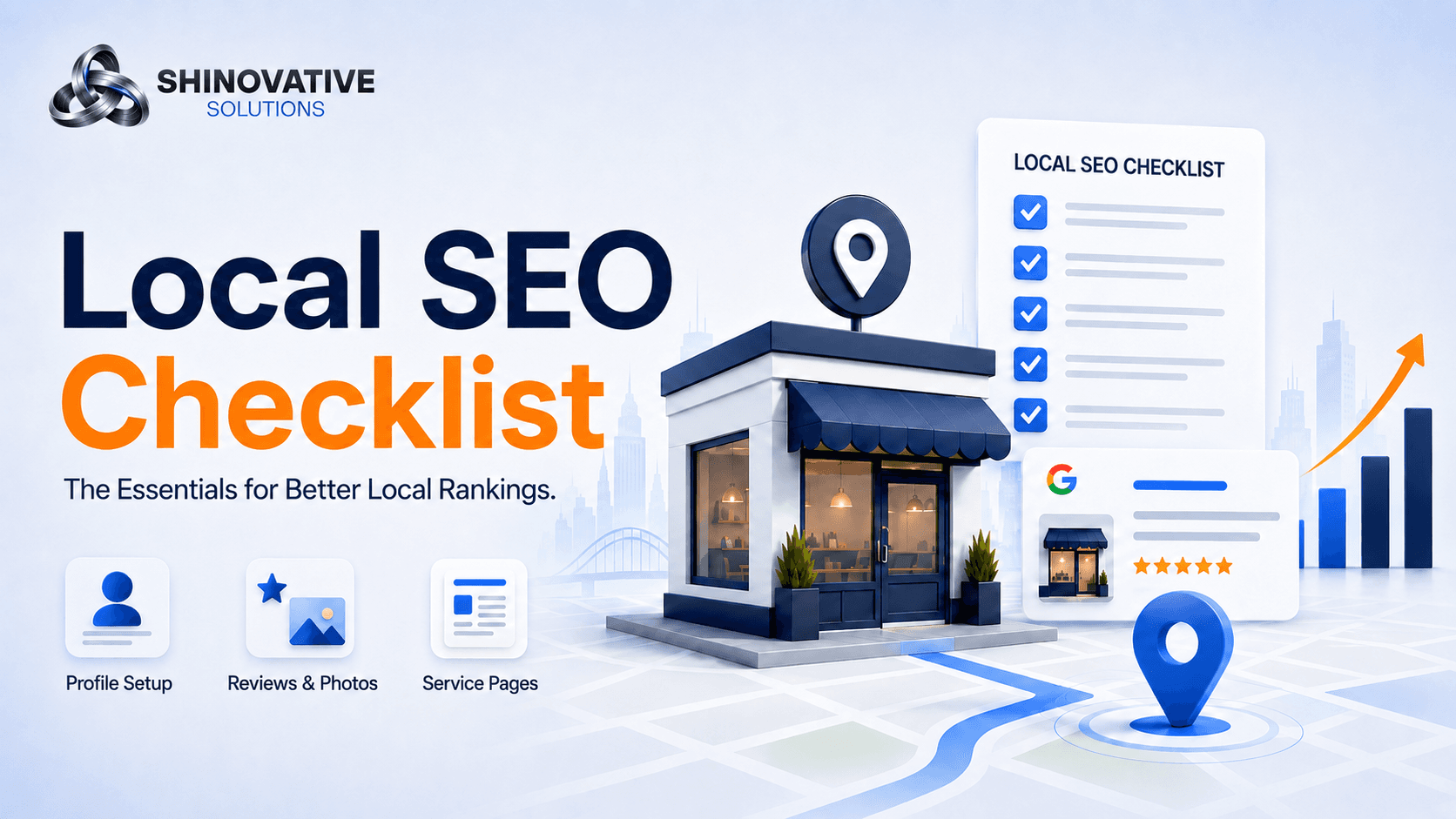
Quick Local SEO Checklist
Use this checklist to review your business:
- Google Business Profile is complete
- Correct primary category is selected
- Services are added properly
- Business hours are updated
- Real photos are uploaded
- Reviews are requested regularly
- Reviews are answered professionally
- Website has separate service pages
- Local keywords are used naturally
- Business information is consistent everywhere
- Website has click-to-call or WhatsApp buttons
- Mobile experience is smooth
- Calls, clicks, and leads are tracked
If you fix these basics, your local SEO foundation becomes much stronger than most competitors.
Common Local SEO Mistakes
1. Setting up Google Business Profile once and ignoring it
Your profile should be updated regularly with photos, posts, services, and review replies.
2. Using only generic keywords
“Best service” is not enough. Use service + location keywords naturally.
3. Not asking for reviews
Happy customers often forget unless you ask.
4. Having a slow website
If your website is slow or confusing, people leave before contacting you.
5. Not tracking leads
Without tracking, you do not know whether your SEO is actually working.
Final Takeaway
Local SEO is not magic. It is a visibility system.
If your profile is complete, your website is clear, your reviews build trust, and your business information is consistent, you give Google and customers more reasons to choose you.
Start with the basics. Fix what is incomplete. Add proof. Track results.
Small improvements done consistently can lead to more calls, more visits, and more local customers.
FAQs
What is a local SEO checklist?
A local SEO checklist is a list of important steps that help a business improve visibility in local search results, especially on Google Search and Google Maps.
Is Google Business Profile important for local SEO?
Yes. Google Business Profile is one of the most important parts of local SEO because it helps your business appear in local search and map results.
How often should I update my Google Business Profile?
You should update it whenever business details change and regularly add photos, posts, services, and review replies to keep it active.
Do reviews help local SEO?
Yes. Reviews help build trust and can support local visibility, especially when they are genuine, detailed, and relevant to your services.
Can local SEO help service businesses without a storefront?
Yes. Service-area businesses can still use local SEO by setting service areas, building strong service pages, collecting reviews, and optimizing their online presence.
Internal Link Suggestions
Link this blog to:
- Local SEO Services page
- Rank #1 on Google blog
- On-Page SEO Checklist blog
- Website Development Services page
- Contact page
Suggested anchor text:
- local SEO services
- Google Business Profile optimization
- rank higher on Google
- website development for local businesses
- local SEO audit
Soft CTA
Want to know what is stopping your business from showing up in local search?
Shineovative Solutions can review your Google Business Profile, website structure, reviews, and local SEO setup to identify what needs improvement and where your best ranking opportunities are.